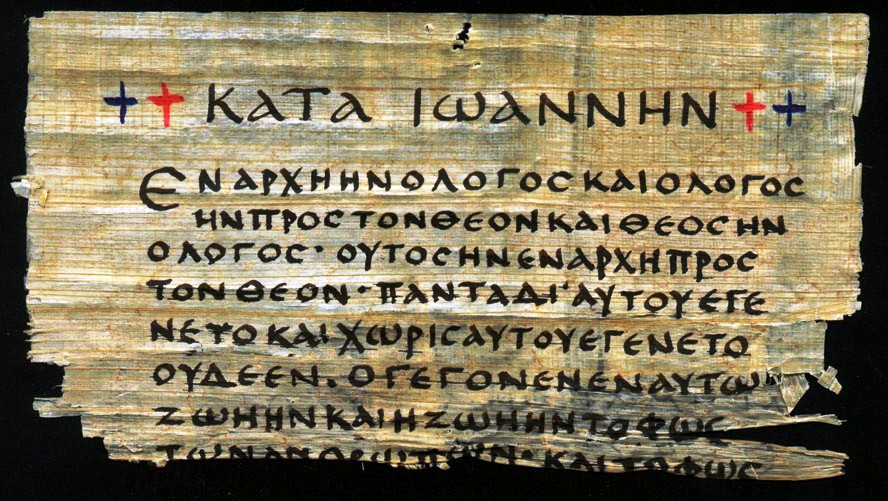
Monday, 8 February 2021

Readings, hymns and
sermon ideas for
Sunday 14 February 2021,
Sunday before Lent,
Transfiguration Sunday

The Transfiguration depicted in a stained-glass window in the Collegiate Church of Saint Nicholas, Galway (Photograph: Patrick Comerford)

Patrick Comerford

Sunday next, 14 February 2021, is the Sunday before Lent, or Transfiguration Sunday. The options for the Sunday between 11 and 17 February (Proper 1) should not be used, as these apply only in years when this Sunday comes before the Second Sunday before Lent.

The readings in the Revised Common Lectionary (RCL) as adapted for use in the Church of Ireland for Sunday next are:

The Readings: II Kings 2: 1-12; Psalm 50: 1-6; II Corinthians 4: 3-6; and Mark 9: 2-9.

We should also remember that many people, especially young couples, are more likely to think of 14 February as Saint Valentine’s Day instead of the Sunday before Lent.
Witth this in mind, there are some additonal notes on Saint Valentine, and some appopriate liturgical resources and suggestions at the end of this posting.

The Transfiguration depicted in a stained-glass window in a church in Lucan, Co Dublin (Photograph: Patrick Comerford)

Celebrating the Transfiguration:

The two Sundays before Lent have special themes outside the cycle of readings in Ordinary Time. The Second Sunday before Lent focusses on Creation, while the Sunday before Lent is Transfiguration Sunday.

In early Church tradition, the Transfiguration is connected with the approaching death and resurrection of Christ, and so it was said to have taken place 40 days before the Crucifixion.

At first, the feast of the Transfiguration belonged to the pre-Easter season of the Church and was celebrated on one of the Sundays of Lent. For example, a sermon on the Transfiguration was preached in Lent by Saint John Chrysostom while he was a priest in Antioch in 390. The Feast of the Transfiguration was celebrated on Mount Sinai from the mid-fifth century, and in Constantinople from the late seventh century. Saint Gregory Palamas, the great teacher of the Transfiguration, is commemorated during Lent.

From 1474 until at least 1969, the Transfiguration was observed in the Roman Catholic Church on the Second Sunday in Lent. In some modern calendars, including Roman Catholic, Lutheran and Anglican calendars, the Transfiguration is now commemorated on the Sunday immediately before Ash Wednesday, although traditionally, the Feast of the Transfiguration is also observed in the Anglican, Roman Catholic and Orthodox calendars on 6 August. It may have been moved there because 6 August is 40 days before 14 September, the Feast of the Holy Cross, so keeping the tradition that the Transfiguration took place 40 days before the Crucifixion.

Among Anglicans, the Feast of the Transfiguration disappeared from the 1549 Book of Common Prayer. When it reappeared in the 1662 Book of Common Prayer, it returned to the calendar but without any other provisions.

In The Book of Common Prayer (2004), the Church of Ireland has Collects and Post-Communion prayers for the Feast of the Transfiguration on 6 August, along with this provision to mark the Transfiguration on the Sunday before Lent.

In the Orthodox Church, the Feast of the Transfiguration is a major feast, and is counted among the Twelve Great Feasts of the Church. This is also the second of the ‘Three Feasts of the Saviour in August.’ These are:

● The Procession of the Cross (1 August).
● The Transfiguration (6 August).
● The ‘Icon of Christ Not Made by Hands’ (16 August).

But the Transfiguration is also associated with ordinations: from the time of Pope Leo the Great (died 460), the Transfiguration was the Gospel reading set for Ember Saturday, the day before ordinations.

‘A chariot of fire and horses of fire separated the two of them, and Elijah ascended in a whirlwind into heaven’ (II Kings 2: 11) … Elijah in the Chariot of Fire, depicted in a window in Church of Saint Mary the Virgin, Newport, Essex (Photograph: Patrick Comerford)

II Kings 2: 1-12:

The first reading is the story of Elijah ascending in the chariot of fire in a whirlwind into heaven.

Israel has split into two kingdoms: Israel in the north and Judah in the south. At the time of this reading (850-849 BC), Ahaziah is King of Israel. The Bible describes only two people as worthy enough to be taken up to heaven without dying: Enoch (Genesis 5: 24) and Elijah.

Elijah and Elisha start their journey at Gilgal, in the hill country north of Bethel. On three occasions, Elijah invites Elisha to travel no further, and he tests Elisha, to see whether he is truly loyal. Elisha proves his loyalty each time, and so the two travel south from Gilgal to Bethel, then east to Jericho and the Jordan.

The ‘company of prophets’ are communities of followers, disciples, of Elijah. They are like monks, and traditions about them have become part of the story of the Carmelite order.

Elijah’s mantle or cloak is almost part of him. When the waters part, readers would recall the crossing of the Red Sea (Exodus 14) and the Ark being carried across the Jordan (Joshua 3: 14-17).

Elijah offers Elisha a reward for his loyalty. Elisha asks that he receive a double share or the principal part of Elijah’s spirituality. Custom and law said the eldest son should inherit a double portion of his father’s possessions (see Deuteronomy 21: 17). Elijah cannot grant this request himself, for it is God’s to give. If Elisha sees Elijah taken up, God will grant the wish. Fire is a symbol of God’s presence, and recalls how God appeared in the burning bush (see Exodus 3: 2).

What is happening in verse 12? Perhaps Elisha is comparing the chariots of God with the chariots of Israel; perhaps he recognises that Elijah’s spiritual strength is better security for Israel than its army. Elisha sees Elijah’s departure. Tearing clothes is still a Jewish tradition in expressing grief.

In the verses that follow, Elisha picks up Elijah’s mantle, the symbol of spirituality. Elijah has been taken up to heaven, and Elisha is his successor.

‘Let the heavens declare his righteousness’ (Psalm 50: 6) … the skies seen from inside the bell tower beside Saint Mary’s Church, Askeaton, Co Limerick (Photograph: Patrick Comerford, 2021)

Psalm 50: 1-6:

Psalm talks 50 is about God who shines forth and who being revealed in glory. This psalm is a liturgy of divine judgment.

God calls summons the whole earth and the heaven above to witness his legal judgment of the ungodly. In Zion, or Jerusalem, he shows himself in traditional Biblical ways: in fire and tempest (verse 3). This is the God of heaven and earth (verse 4).

He is both judge (verse 6) and prosecutor (‘testify,’ verse 7), and the heavens declare his righteousness (verse 6).

‘We have this treasure in clay jars’ (II Corinthians 4: 7) … clay jars on a street in Rethymnon in Crete (Photograph: Patrick Comerford)

II Corinthians 4: 5-12:

In this Epistle reading, the Apostle Paul writes about the minds of unbelievers being blinded, while our eyes should be focussed on the light of the Gospel, which is the glory of Christ, who is the image of God, and of light shining out of darkness.

Saint Paul is continuing to answer a letter from the Church in Corinth. It seems some Church members there have criticised him for failing to make clear the good news, or for limited success in bringing people to Christ.

Now, in this reading, Saint Paul defends himself, saying that, despite what some may say, he proclaims not himself but Jesus Christ as Lord (verse 5).

He quotes the first words God speaks in the Bible, ‘Let light shine out of darkness’ (verse 6, see Genesis 1: 3). He points out that God begins the process of creation with light, and this light is ‘the knowledge of the glory of God in the face of Jesus Christ.’

Despite our sufferings in this world, the life of Jesus is made visible in the way we live (verse 11).

The Transfiguration by Aidan Hart … in the Transfiguration, both the humanity and divinity of Christ are manifested to us

The Transfiguration

The Transfiguration is described in the three Synoptic Gospels (see Matthew 17: 1-9; Mark 9: 2-8; Luke 9: 28-36). In addition, there may be allusions to the Transfiguration in John 1: 14 and in II Peter 1: 1-18, where Peter describes himself as an eyewitness ‘of his sovereign majesty.’

The Synoptic accounts of the Transfiguration are very similar in wording.

So, what is different between Saint Mark’s account of the Transfiguration and the accounts in the other two Synoptic Gospels?

Saint Mark, like Saint Matthew, tells us these events take place ‘six days later,’ although Saint Luke says they take place ‘eight days later.’

All three accounts tell us that Christ’s robes become dazzling white, but Saint Mark alone tells us they are a white ‘such as no one on earth could bleach them’ (verse 3).

Saint Mark also tells us the three disciples were ‘terrified.’

A modern icon of the Transfiguration … the Transfiguration also points to Christ’s great and glorious Second Coming and the fulfilment of the Kingdom of God

Telling the story

Should we describe the Transfiguration as a miracle? If we do, then it is the only Gospel miracle that happens to Christ himself. On the other hand, Saint Thomas Aquinas spoke of the Transfiguration as ‘the greatest miracle,’ because it complemented Baptism and showed the perfection of life in Heaven.

Saint Peter’s reference to the booths could imply that the Transfiguration took place during the time of the Feast of Tabernacles, when Biblical Jews were camping out in the fields for the grape harvest. This Feast also recalled the wanderings in the wilderness recorded in the Book Exodus.

None of the Gospel accounts identifies the ‘high mountain’ by name. The earliest identification of the mountain as Mount Tabor was by Jerome in the late fourth century. But does it matter where the location is?

Consider the place of Mountains in the salvation story and in revelation:

● Moses meets God in the cloud and the burning bush on Mount Sinai, and there receives the tablets of the Covenant (Exodus 25 to 31);
● Elijah confronts the prophets of Baal on Mount Carmel (I Kings 18);
● Elijah climbs Mount Sinai and finds God not in the wind, the earthquake or the fire, but in the still small voice in the cleft of the Mountain (I Kings 19: 12);
● The Sermon, which is the ‘manifesto’ of the new covenant, is the Sermon on the Mount;
● The Mount of Olives is a key location in the Passion narrative;
● Christ is crucified on Mount Calvary;
● Saint John receives his Revelation in the cave at the top of the mountain on Patmos.

As for the cloud, all three Synoptic Gospels describe the cloud’s descent in terms of overshadowing (επισκιαζειν, episkiazein), which in Greek is a pun on the word tent (σκηνάς, skenas). But this is also the same word used to describe the Holy Spirit overshadowing the Virgin Mary at the Annunciation: καὶ δύναμις ὑψίστου ἐπισκιάσει σοι (Luke 1: 35).

We may recall how the pillar of cloud leads the people through the wilderness by day, just as the pillar of fire leads them by night. Moses entered the cloud on Mount Sinai (Exodus 24: 18), the Shekinah cloud is the localised manifestation of the presence of God (Exodus 19: 9; 33: 9; 34: 5; 40: 34; II Maccabees 2: 8).

The cloud takes Christ up into heaven at the Ascension (Acts 1: 9-10).

Saint Paul talks about the living and the dead being caught up in the cloud to meet the Lord (I Thessalonians 4: 17).

The Transfiguration … a fresco in an Orthodox church in the US

The principle characters:

Christ is the focus of the Transfiguration, but who are the other principle characters in this story?

1, The Trinity: in Orthodox theology, the Transfiguration is not only a feast in honour of Christ, but a feast of the Holy Trinity, for all three Persons of the Trinity are present at that moment:

● God the Father speaks from heaven: ‘This is my Son, the Beloved; with him I am well pleased; listen to him’ (Matthew 17: 5).
● God the Son is transfigured.
● God the Holy Spirit is present in the form of a cloud.

In this sense, the Transfiguration is also considered the ‘Small Epiphany’ – the ‘Great Epiphany’ being the Baptism of Christ, when the Holy Trinity appears in a similar pattern).

2, Moses and Elijah: At the Transfiguration, Christ appears with Moses and Elijah, the two pre-eminent figures of Judaism, standing alongside him. Saint John Chrysostom explains their presence in three ways:

● They represent the Law and the Prophets – Moses receives the Law from God, and Elijah is a great prophet.
● They both experience visions of God – Moses on Mount Sinai and Elijah on Mount Carmel.
● They represent the living and the dead – Elijah, the living, because he is taken up into heaven in a chariot of fire (see the first reading for this day), and Moses, the dead, because he does experience death.

Moses and Elijah show that the Law and the Prophets point to the coming of Christ, and their recognition of and conversation with Christ symbolise how he fulfils ‘the law and the prophets’ (Matthew 5: 17-19). Moses and Elijah also stand for the living and dead, for Moses dies and his burial place is known, while Elijah is taken alive into heaven in order to appear again to announce the time of God’s salvation.

It was commonly believed that Elijah would reappear before the coming of the Messiah (see Malachi 4), and the three interpret Christ’s response as a reference to Saint John the Baptist (Matthew 17: 13).

3, The Disciples: Saint Peter, Saint James and Saint John are with Christ on the mountain top. But, we may ask, why these three disciples?

Do you remember how this might relate to Moses and Elijah? Moses ascends the mountain with three trusted companions, Aaron, Nadab and Abihu, to confirm the covenant (Exodus 24: 1), and God’s glory covers the mountain in a cloud for six days (Exodus 25 to 31).

In some ways, Saint Peter, Saint James and Saint John serve as an inner circle or a ‘kitchen cabinet’ in the Gospels. Perhaps this intimacy is reflected in the fact that they are the only disciples who are given nickname by Christ: Simon becomes the Rock, and James and John are the sons of thunder (Luke 5: 10).

They are at the Transfiguration (Matthew 17: 1, Mark 9: 2; Luke 9: 28), but they are also at the raising of the daughter of Jairus (Mark 5: 35-43; Luke 6: 51), they are at the top of the Mount of Olives when Christ is about to enter Jerusalem (Mark 13: 3), they help to prepare for the Passover (Luke 22: 8), and they are in Gethsemane (Matthew 26: 37).

Jerome speaks of Saint Peter as the rock on which the Church is built, Saint James as the first of the apostles to die a martyr’s death, Saint John as the beloved disciple.

They are a trusted group who also serve to represent us at each moment in the story of salvation.

The Church of the Transfiguration in Sneem, Co Kerry (Photograph: Patrick Comerford, 2020)

The meaning of the Transfiguration:

The Transfiguration of Christ in itself is the fulfilment of all of the Theophanies and manifestations of God, a fulfilment made perfect and complete in the person of Christ. We could say the Transfiguration is the culmination of Christ’s public life, just as his Baptism is its starting point, and his Ascension its end. As Archbishop Michael Ramsey writes in his book, The Glory of God and the Transfiguration of Christ: ‘The Transfiguration stands as a gateway to the saving events of the Gospel.’

The Transfiguration reveals Christ’s identity as the Son of God. In the Gospel, after the voice speaks, Elijah and Moses have disappeared, and Christ and the three head down the mountain. The three ask themselves what he means by ‘risen from the dead’ (Mark 9: 9-10). When they ask Christ about Elijah, he responds: ‘Elijah is indeed coming and will restore all things; but I tell you that Elijah has already come …’ (Mark 9: 12-13). He tells them to keep these things a secret until the Son of Man has risen from the dead. Yet, in keeping with the Messianic secret, he tells the three not to tell others what they have seen until he has risen on the third day after his death.

Event and process

The Transfiguration is both an event and a process. The original Greek word for Transfiguration in the Gospel accounts is μεταμόρφωσις (metamorphosis), which gives us access to a deeper and more theological meaning, a deeper truth, than the word derived from the Latin transfiguratio, which can be translated by ‘to be changed into another from.’ But the Greek μεταμόρφωσις means ‘to progress from one state of being to another.’ Consider the metamorphosis of the chrysalis into the butterfly.

Saint Paul also uses the word μεταμόρφωσις when he describes how the Christian is to be transfigured, transformed, into the image of Christ (II Corinthians 3: 18).

The metamorphosis invites us into the event of becoming what we have been created to be. This is what Orthodox writers call deification. Transfiguration is a profound change, by God, in Christ, through the Spirit. And so, the Transfiguration reveals to us our ultimate destiny as Christians, the ultimate destiny of all people and all creation to be transformed and glorified by the majestic splendour of God himself.

The Transfiguration points to Christ’s great and glorious Second Coming and the fulfilment of the Kingdom of God, when all of creation will be transfigured and filled with light. The vision of Christ in his glory and the experience of the divine light are at the very heart of both Orthodox mysticism and Orthodox eschatology. The ‘uncreated light’ is a hallmark theme in Orthodox spirituality, especially in the writings of Saint Gregory Palamas and the school of the thought that is hesychasm, which draws constantly on the themes of the Transfiguration.

Saint Gregory Palamas distinguishes between the essence of God, which is beyond human apprehension, and the energies of God, which are the ways in which we can experience and know God. According to him, the light of the Transfiguration ‘is not something that comes to be and then vanishes.’ Rather, Christ’s disciples experienced a transformation of their senses so that ‘they beheld the Ineffable Light where and to the extent that the Spirit granted it to them.’

This was, therefore, not only a prefiguration of the eternal blessedness to which all Christians look forward, but also of the Kingdom of God already revealed, realised and come.

In Orthodox theology, since Patristic times, the three booths or tents that the three disciples want to erect represent three stages of salvation:

● Virtue, which is the active life of ascetic struggle, and which is represented by Elijah.
● Spiritual knowledge, which requires right discernment in natural contemplation or contemplation of the natural order, which was disclosed by Moses.
● Theology, which means contemplation of God, which requires the consummate perfection of wisdom, and which was revealed by Christ.
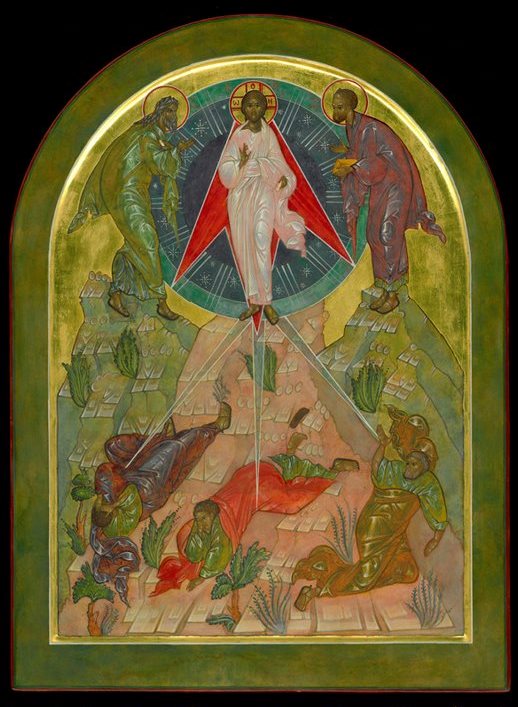
The Transfiguration in a poster from the Institute for Orthodox Christian Studies, Cambridge

Concluding images:

In a lecture in Cambridge ten years ago [2011], Metropolitan Kallistos [Ware], the pre-eminent Orthodox theologian in England, spoke of the Transfiguration as a disclosure not only of what God is but of what we are. The New Adam shows us human nature as it was before the fall. The Transfiguration looks back to the beginning, but also looks forward to the end, to the final glory of Christ’s second coming, because through the incarnation Christ raised human nature to a new level, opening new possibilities.

The incarnation is a new beginning for the human race, and in the Transfiguration we see not only our human nature at the beginning, but as it can be in and through Christ at the end, he told the Summer School in Sidney Sussex College organised by the Institute for Orthodox Christian Studies.

Secular Christianity rests satisfied with our human nature as it is now. But he wants us to look to our potentialities, as seen in the Transfiguration of Christ. The light of the Transfiguration embraces all created things, nothing is irredeemably secular, all created things can be bathed in the light of the Transfiguration.

He also referred to Revelation 21: 5, where Christ tells the Seer of Patmos: ‘Behold, I make all things new’ – not: ‘Behold, I make all new things.’ The Transfiguration is a pre-figuration of the transfiguration of the cosmos, he said.

But with the Transfiguration comes the invitation to bear the cross with Christ. Peter, James and John were with Christ on Mount Tabor and with him in Gethsemane. We must understand the Passion of Christ and the Transfiguration in the light of each other, not as two separate mysteries, but aspects of the one single mystery. Mount Tabor and Mount Calvary go together; and glory and suffering go together.

If we are to undertake the task of Transfiguration, we cannot leave our cross behind. If we are to bring the secular, fallen world into the glory of Christ, that has to be through self-emptying κένωσις (kenosis), cross-bearing and suffering. There is no answer to secularism that does not take account of the Cross, as well taking account of the Transfiguration and the Resurrection.

The Transfiguration provides a guideline for confronting the secular world, he said. And he retold a story from Leo Tolstoy, Three Questions. The central figure is set a task of answering three questions:

What is the most important moment? The most important moment is now, the past is gone, and the future does not exist yet.

Who is the most important person? This person who is before you in this very instant.

What is the most important task? This task which you are engaged in here and now.

The light which shone from Christ on the mountaintop is not a physical and created light, but an eternal and uncreated light, a divine light, the light of the Godhead, the light of the Holy Trinity.

The experience on Mount Tabor confirms Saint Peter’s confession of faith which reveals Christ as the Son of the Living God. Yet Christ remains fully human as ever he was, as fully human as you or I, and his humanity is not abolished. But the Godhead shines through his body and from it.

In Christ dwells all the fullness of the Godhead. But at other points in his life, the glory is hidden beneath the veil of his flesh. What we see in Christ on Mount Tabor is human nature, our human nature, taken up into God and filled with the light of God. ‘So this should be our attitude to the secular world,’ Metropolitan Kallistos said.

Or, as the Revd Dr Kenneth Leech once said: ‘Transfiguration can and does occur “just around the corner,” occurs in the midst of perplexity, imperfection, and disastrous misunderstanding.’

The Transfiguration in an icon in the parish church in the hill-side village of Piskopiano in Crete (Photograph: Patrick Comerford)

Some questions to consider

Is this a more appropriate time for celebrating the Transfiguration?

Can you identify with Saint Peter’s hasty response?

Or do you sometimes feel terrified in the presence of God, and know not what to do?

Saint Matthew alone has Christ telling the three disciples: ‘Get up and do not be afraid.’ (Matthew 17: 7). What are people’s fears today? What role have we in calming those fears and in reassuring people of the presence of Christ?

Where do you think people can be brought to see Christ today? In the Church? In the poor? In themselves?

Look at verse 9. Is there an appropriate time for mission and an inappropriate time?

The Transfiguration, an icon by Adrienne Lord in Christ Church Cathedral, Dublin (Photograph: Patrick Comerford)

Mark 9: 2-9 (NRSVA):

2 Six days later, Jesus took with him Peter and James and John, and led them up a high mountain apart, by themselves. And he was transfigured before them, 3 and his clothes became dazzling white, such as no one on earth could bleach them. 4 And there appeared to them Elijah with Moses, who were talking with Jesus. 5 Then Peter said to Jesus, ‘Rabbi, it is good for us to be here; let us make three dwellings, one for you, one for Moses, and one for Elijah.’ 6 He did not know what to say, for they were terrified. 7 Then a cloud overshadowed them, and from the cloud there came a voice, ‘This is my Son, the Beloved; listen to him!’ 8 Suddenly when they looked around, they saw no one with them any more, but only Jesus.

9 As they were coming down the mountain, he ordered them to tell no one about what they had seen, until after the Son of Man had risen from the dead.

The Transfiguration depicted in a fresco in the Analipsi Church (Resurrection) in Georgioupoli, Crete (Photograph: Patrick Comerford)

Liturgical Resources:

Liturgical Colour: White (Transfiguration) or Green (the Sunday before Lent).

Note the liturgical colour returns to Green for Monday and Tuesday, and then turns to Violent on Wednesday 17 February 2021 (Ash Wednesday).

Penitential Kyries:

Your unfailing kindness, O Lord, is in the heavens,
and your faithfulness reaches to the clouds.
Lord, have mercy.
Lord, have mercy.

Your righteousness is like the strong mountains,
and your justice as the great deep.
Christ, have mercy.
Christ, have mercy.

For with you is the well of life:
and in your light shall we see light.
Lord, have mercy.
Lord, have mercy.

The Collect of the Day:

Almighty Father,
whose Son was revealed in majesty
before he suffered death upon the cross:
Give us grace to perceive his glory,
that we may be strengthened to suffer with him
and be changed into his likeness, from glory to glory;
who is alive and reigns with you and the Holy Spirit,
one God, now and for ever.

The Collect of the Word:

Holy God,
you have revealed the glory of your love in Jesus Christ,
and have given us a share in your Spirit.
May we who listen to Christ
follow faithfully,
and, in the dark places where you send us,
reveal the light of your gospel.

Introduction to the Peace:

Christ will transfigure our human body
and give it a form like that of his own glorious body.
We are the Body of Christ. We share his peace.
(cf Philippians 3: 21, 1 Corinthians 11: 27, Romans 5: 1)

Preface:

Through Jesus Christ our Lord,
whose divine glory shone forth upon the holy mountain
before chosen witnesses of his majesty;
when your own voice from heaven
proclaimed him your beloved Son:

Post Communion Prayer:

Holy God
we see your glory in the face of Jesus Christ.
May we who are partakers at his table
reflect his life in word and deed,
that all the world may know
his power to change and save.
This we ask through Jesus Christ our Lord.

Blessing:

The God of all grace,
who called you to his eternal glory in Christ Jesus,
establish, strengthen and settle you in the faith:

The Transfiguration depicted in a fresco in the Church of the Four Martyrs in Rethymnon, Crete … in Orthodox icons of the Transfiguration, we have drama and a moment full of movement (Photograph: Patrick Comerford)

Suggested Hymns:

II Kings 2: 1-12:

643, Be thou my vision, O Lord of my heart
297, Come, thou Holy Spirit, come
298, Filled with the Spirit’s power, with one accord
647, Guide me, O thou great Jehovah
386, Spirit of God, unseen as the wind
310, Spirit of the living God

Psalm 50: 1-6:

501, Christ is the world’s true light
381, God has spoken – by his prophets
97, Jesus shall reign where’er the sun
362, O God, beyond all praising

II Corinthians 4: 3-6:

684, All praise to thee, for thou, O King divine
11, Can we by searching find our God
52, Christ, whose glory fills the skies
613, Eternal light shine in my heart
481, God is working his purpose out as year succeeds to year
324, God, whose almighty word
6, Immortal, invisible, God only wise
482, Jesus bids us shine with a pure clear light
484, Lift high the cross, the love of Christ proclaim
195, Lord, the light of your love is shining
228, Meekness and majesty
486, People of God, arise
341, Spirit divine, attend our prayers
490, The Spirit lives to set us free
491, We have a gospel to proclaim
493, Ye that know the Lord is gracious

Mark 9: 2-9:

325, Be still, for the presence of the Lord, the Holy One is here
643, Be thou my vision, O Lord of my heart
501, Christ is the world’s true light
205, Christ upon the mountain peak
52, Christ, whose glory fills the skies
331, God reveals his presence
209, Here in this holy time and place
101, Jesus, the very thought of thee
195, Lord, the light of your love is shining
102, Name of all majesty
60, O Jesus, Lord of heavenly race
449, Thee we adore, O hidden Saviour, thee
112, There is a Redeemer
374, When all thy mercies, O my God

Hearts and gifts for Saint Valentine’s Day in a shopfront in Askeaton, Co Limerick (Photograph: Patrick Comerford)

An additional note on Saint Valentine’s Day:

For many people, especially young couples, they are more likely to think of 14 February as Saint Valentine’s Day instead of the Sunday before Lent.

Thousands of locks will be secured to bridges and fences across Europe, Juliet’s supposed balcony in Verona will be visited by countless tourists and the Carmelite Church in Whitefriar Street, Dublin, will be full for special masses marking Saint Valentine’s Day, when the martyr’s reliquary is taken from a special shrine in a side chapel and placed before the High Altar.

Saint Valentine is a widely believed to have been a third century Roman martyr. He is commemorated on 14 February and since the High Middle Ages he has been associated with young love.

Yet, despite his popularity, we know nothing reliable about Saint Valentine apart from his name and the tradition that he died a martyr’s death on 14 February on the Via Flaminia, north of Rome. Many of the stories about his life are mythical and unreliable.

Popular legend says Valentine was a Roman priest who was martyred during the reign of Claudius II, Claudius Gothicus. He was arrested and imprisoned when he was caught marrying Christian couples and helping persecuted Christians.

It is said Claudius took a liking to this prisoner. But when Valentinus tried to convert the Emperor, he was condemned to death. He was beaten with clubs and stones; when that failed to kill him, he was beheaded outside the Flaminian Gate.

Many of the legends about Saint Valentine can be traced only to 14th century England and the writings of Geoffrey Chaucer and his circle, when 14 February was already linked with romantic love.

Because of the myths and legends, Saint Valentine was dropped from the Roman Catholic Calendar of Saints in 1969. Nevertheless, the ‘Martyr Valentinus who died on 14 February on the Via Flaminia close to the Milvian Bridge in Rome’ is still on the list of officially recognised saints.

The day is alsocelebrated as Saint Valentine’s Day with a commemoration in Common Worship in the Church of England and in other churches in the Anglican Communion.

The relics of Saint Valentine were given by Pope Gregory XVI as a gift to Father John Spratt, an Irish Carmelite Prior, after he preached a popular sermon in the Jesuit church in Rome, the Gesu, in 1836. Since then, they have been kept in a shrine in the Carmelite Church in Whitefriar Street, Dublin.

Although the story of Saint Valentine is inextricably linked with romantic young love, it is good to be reminded of love as we prepare for Lent, and that our Lenten pilgrimage is a journey towards fully accepting the love of God offered to us through Christ on Good Friday and Easter Day.

Liturgical resources:

These prayers, included in suggested intercessions in the Book of Common Prayer for Wednesdays, may be helpful in writing prayers on the theme of love:

Loving Father, we give you thanks
for the obedience of Christ fulfilled in the cross,
his bearing of the sin of the world,
his mercy for the world which never fails …

for the joy of loving and being loved,
for friendship,
the lives to which our own are bound,
the gift of peace with you and one another …

for the communities in whose life we share
and all relationships in which reconciliation may be known …

These collects may also be used as additional collects after the Collect of the Day:

The Collect (Trinity II):

Lord, you have taught us
that all our doings without love are nothing worth:
Send your Holy Spirit
and pour into our hearts that most excellent gift of love,
the true bond of peace and of all virtues,
without which whoever lives is counted dead before you.
Grant this for your only Son Jesus Christ’s sake.
(Book of Common Prayer, p 141).

The Collect (Trinity VI):

Merciful God,
you have prepared for those who love you
such good things as pass our understanding:
Pour into our hearts such love toward you
that we, loving you above all things,
may obtain your promises,
which exceed all that we can desire;
through Jesus Christ our Lord.

Concluding Prayer:

Help us to share in Christ’s ministry
of love and service to one another;
through the same Jesus Christ our Lord,
who in the unity of the Holy Spirit
is one with you for ever. Amen.
(Book of Common Prayer, p 141).

The shrine of Saint Valentine in the Carmelite Church in Whitefriar Street, Dublin (Photograph: Patrick Comerford)

Scripture quotations are from the New Revised Standard Version Bible: Anglicised Edition copyright © 1989, 1995, National Council of the Churches of Christ in the United States of America. Used by permission. All rights reserved worldwide. http://nrsvbibles.org

Material from the Book of Common Prayer is copyright © 2004, Representative Body of the Church of Ireland.

The hymn suggestions are provided in Sing to the Word (2000), edited by Bishop Edward Darling. The hymn numbers refer to the Church of Ireland’s Church Hymnal (5th edition, Oxford: OUP, 2000).

The Monastery of the Transfiguration or Great Meteoron in Meteora, northern Greece (Photograph: Patrick Comerford, 2019)

Wednesday, 3 February 2021

Preparing for Lent 2021:
Liturgical resources, readings
and preparing Lenten studies

‘The Fight Between Carnival and Lent,’ by Pieter Bruegel the Elder (1559)

Patrick Comerford

In previous years, workshops on preparing for Lent and Holy Week have been organised for clergy and readers in the Diocese of Limerick and Killaloe.

This year, the current pandemic lockdown makes it difficult to plan for Lenten services or study evenings.

These resources are designed to help plan for on-line services or study groups, but are also designed to help prepare for Lenten events may be organised when the lockdown restrictions are eased or lifted.

‘The Ladder of Divine Ascent’ … an icon from Mount Sinai based on the work of Saint John Klimakos … Saint John Klimakos refers in ‘The Ladder of Divine Ascent’ to the ‘bright sadness’ of Lent

Preparing for Lent 2021

I sometimes think that the misrepresentation and misinterpretation of Lent has, in turn, deprived many of its true meaning and significance.

The Orthodox theologian Aaron Taylor wrote in the Guardian some years ago [2010] of how he hoped that the Lenten fast ‘must never become a source of pride on the one hand, or something oppressive on the other. It is a measuring stick for our individual practice … [it] is primarily about obedience, and thus humility. But it also creates a sense of need and sobriety. It teaches us to seek our consolation in things of the spirit rather than of the flesh.’

He pointed out that fasting ‘is merely a physical accompaniment to the real heart and joy of Lent: the prayer and worship that are intensified during this season …’ and he referred to the ‘joy-making mourning’ recommended by an early writer, Saint John Klimakos, in The Ladder of Divine Ascent, to the ‘bright sadness’ of Lent.

At Lent, we should remind ourselves that we have all fallen short, so that we are not the people we should be. We all too easily focus on ourselves. But true Lenten fasting allows us to experience a sense of freedom as we relinquish our self-centredness and can produce joy in our hearts – just what we pray for in the Collect of Ash Wednesday.

And Aaron Taylor added: ‘If we do not to some extent attain to this joy-through-mourning, we have entirely missed the point of Lent.’

He concluded his ‘Face to Faith’ column in the Guardian by saying: ‘As long as there is evil in the world, we can be sure that some of it still lies hidden in our hearts. And as long as we are able to shed tears over our condition, there remains hope that we will one day see the glorious day of resurrection.’

The Liturgical colour in Lent is Violet (Photograph: Patrick Comerford)

Part 1: Liturgical resources for Lent 2021:

The Lectionary:

Ash Wednesday, 17 February 2021: Joel 2: 1-2, 12-17 or Isaiah 58: 1-12; Psalm 51: 1-17; II Corinthians 5: 20b to 6: 10; Matthew 6: 1-6, 16-21. These lectionary readings are common to Years A, B and C.

First Sunday in Lent, 21 February 2021: Genesis 9: 8-17; Psalm 25: 1-9; I Peter 3: 18-22; Mark 1: 9-15.

Second Sunday in Lent, 28 February 2021: Genesis 17: 1-7, 15-16; Psalm 22: 23-31; Romans 4: 13-25; Mark 8: 31-38 or Mark 9: 2-9.

Note: The second, optional Gospel reading is used when Option B has been taken on the Sunday before Lent. As this is an account of the Transfiguration, it is not used when the Sunday before Lent has been observed as Transfiguration Sunday.

Third Sunday in Lent, 7 March 2021: Exodus 21: 4-9; Psalm 19; I Corinthians 1: 18-25; John 2: 13-22.

Fourth Sunday in Lent, 14 March 2021 (Laetare Sunday): Numbers 21: 4-9; Psalm 107: 1-3, 17-22; Ephesians 2: 1-10; John 3: 14-21.

or:

Mothering Sunday: Exodus 2: 1-10 or I Samuel 1: 20-28; Psalm 34: 11-20 or Psalm 127: 1-4; II Corinthians 1: 3-7 or Colossians 3: 12-17; Luke 2: 33-35 or John 19: 25-27.

[Saint Patrick’s Day, Wednesday 17 March 2021: Tobit 13: 1b-7 or Deuteronomy 32: 1-9; Psalm 145: 1-13; II Corinthians 4: 1-12; John 4: 31-38.]

[Saint Joseph’s Day, Friday 19 March 2021: II Samuel 7: 4-16; Psalm 89: 26-36; Romans 4: 13-18; Matthew 1: 54-58.]

Fifth Sunday in Lent, 21 March 2021 (Passiontide begins): Jeremiah 31: 31-34; Psalm 51: 1-13 or Psalm 119: 9-16; Hebrews 5: 5-10; John 12: 20-33.

[Thursday 25 March 2021, The Annunciation of our Lord: Isaiah 7: 10-14; Psalm 40: 5-10; Hebrews 10: 4-10; Luke 1: 26-38.]

Sixth Sunday in Lent, Palm Sunday, 28 March 2021:

Liturgy of the Palms:
Mark 11: 1-11 or John 12: 12-16; Psalm 118: 1-2, 19-29.

Liturgy of the Passion: Isaiah 50: 4-9a; Psalm 31: 9-16; Philippians 2: 5-11; Mark 14: 1 to 14: 47 or Mark 15: 1-39 (40-47).

Holy Week:

Monday in Holy Week, 29 March 2021: Isaiah 42: 1-9; Psalm 36: 5-11; Hebrews 9: 11-15; John 12: 1-11.

Tuesday in Holy Week, 30 March 2021: Isaiah 49: 1-7; Psalm 71: 1-14; I Corinthians 1: 18-31; John 12: 20-36.

Wednesday in Holy Week, 31 March 2021: Isaiah 50: 4-9a; Psalm 70; Hebrews 12: 1-3; John 13: 21-32.

Maundy Thursday, 1 April 2020: Exodus 12: 1-4 (5-10), 11-14; Psalm 116: 1, 10-17; I Corinthians 11: 23-26; John 13: 1-17, 31b-35.

Good Friday, 2 April 2021: Isaiah 52: 13 to 53: 12; Psalm 22; Hebrews 10: 16-25 or Hebrews 4: 14-16; 5: 7-9; John 18: 1 to 19: 42. In the evening: John 19: 38-42 or Colossians 1: 18-23.

Holy Saturday or Easter Eve, 3 April 2020: Job 14: 1-14 or Lamentations 3: 1-9, 19-24; Psalm 31: 1-4, 15-16; I Peter 4: 1-8; Matthew 27: 57-66 or John 19:38-42.

Other Liturgical resources for Lent 2021:

Liturgical Colours:

The Liturgical Colour in Lent is Violet, with the following exceptions:

14 March, ‘Laetare Sunday’: Violet, but there is a traditional option of using Rose (Pink).

17 March, Saint Patrick: White.

19 March, Saint Joseph: White.

25 March, The Annunciation: White.

28 March, Palm Sunday: Red or Violet.

Monday, Tuesday and Wednesday in Holy Week: Red or Violet.

Maundy Thursday: Red or Violet, but White at the Eucharist.

Good Friday and Saturday: there is no provision for a liturgical colour, and there is no celebration of Holy Communion.

‘Still Life With Bible,’ Vincent van Gogh

Part 2: Organising a Bible Study:

1, Choose your theme with care: I once decided to lead a series of Bible studies on the Book of Revelation. I had very good reasons to do so, but there were too many chapters, and eventually it petered out. Nor did I consult with other members of the group about what they wanted or needed.

If you chose one book of the Bible, you – and everyone else too – may get bored before half-way through, apart from the fact that the five or six weeks of Lent does not give the opportunity to get through your chosen book.

Think of a theme or a topic: the Prophets, Women in the Bible, Heroes and Saints, and the Parables are themes that have worked for me in the past, and allow a variety of leadership and in-put.

2, Fix a venue, day and time: go ahead even if only one person turns up. On the other hand, know when to quit.

3, Prepare. Read the passage carefully and thoughtfully yourself well in advance of the group meeting; do not leave it until the day you are meeting. Have Bibles ready for those who forget them, check whether you need to provide pens and paper. Do not plan a PowerPoint presentation unless you through the whole process yourself long enough beforehand.

4, Open with prayer: keep it short, keep it snappy, make it simple, but remind people that this is not just another social gathering. On the other hand, resist the temptation to allow this to replace the Sunday intercessions or the weekly prayer list: focus it on one topic you expect to be the focus of discussion.

5, Try to rotate the leadership: you don’t have to provide leadership all the time; every parish has more than enough people with skills of teaching and leading, and it may help and encourage new skills in the parish.

6, Encourage everyone to take part: allow discussion, but be firm and gentle at one and the same time. At times it will go off track; this may be important, but it may also frustrate those who want to learn more.

7, Encourage different opinions and questions: diversity is an integral part of Anglican identity, and needs to be encouraged and affirmed in parish life too. People like to share their experiences and their opinions, and should be encouraged to ask questions.

8, Do not pretend to have all the answers: we don’t need to know it all, and we should not pretend to know it all.

9, Finish on time: make sure people know that their commitment is respected, and that they can get home on time; make sure they know what next week’s topic, passage or theme is.

10, Make sure tea/coffee/refreshments are available at the end of the evening. Parish life should be fun, and in Lent too.


The Five Marks of Mission … this CartoonChurch.com cartoon by Dave Walker originally appeared in the Church Times

Part 3: Three examples of Lenten Study Resources:

Three examples of Lenten studies and themes may help organising a Lenten study in parishes or provide Lenten resources for Lent 2021: 1, the Diocese of Limerick and Killaloe; 2, USPG; and 3, the Archbishop of Canterbury’s Lent Study Book for 2021.

The Limerick and Killaloe chapter is offering a Lenten Study Course on Tuesdays in February and March based on the Anglican Communion’s Five Points of Mission

1, The Diocese of Limerick and Killaloe:

In the Diocese of Limerick and Killaloe, the deans and chapter members are offering a Lenten Study Course on Tuesday evening in February and March based on the Anglican Communion’s Five Points of Mission.

They are inviting parishes to join them in evening discussions of these Five Marks of Mission, which express the Anglican Communion’s common commitment to, and understanding of, God’s holistic and integral mission.

These five marks are:

1, To proclaim the Good News of the Kingdom
2, To teach, baptise and nurture new believers
3, To respond to human need by loving service
4, To transform unjust structures of society, to challenge violence of every kind and pursue peace and reconciliation
5, To strive to safeguard the integrity of creation, and sustain and renew the life of the earth

These Lenten study evenings at 8 p.m. on Tuesdays in Lent are:

1, Tuesday 23 February: ‘Proclaim the Kingdom’s Good News,’ the Treasurer, Canon Jane Galbraith (Roscrea)

2, Tuesday 2 March: ‘Baptise and nurture new believers,’ the Chancellor, Canon Liz Beasley (Adare)

3, Tuesday 9 March: ‘Respond to human need by loving service,’ the Archdeacon of Killaloe, the Ven Terry Mitchell (Cloughjordan)

4, Tuesday 16 March: ‘Change society’s unjust strictures,’ the Precentor, Canon Patrick Comerford (Rathkeale and Kilnaughtin Group)

5, Tuesday 23 March: ‘Safeguard the integrity of creation,’ the Prebendary of St Munchin and Tulloh, Canon Jim Stephens (Tralee)

To join any/all of the talks, please email the Dean of Limerick for a Zoom link.

‘Four Such a Time as This’ is the Lent Course for 2021 offered by USPG

2, USPG: ‘Four Such a Time as This’ – Lent 2021:

The Lent Appeal this year from the Anglican mission agency United Society Partners in the Gospel (USPG) has the theme For Such A Time As This. It recognises the challenges that the world is currently facing, and focuses on standing in solidarity with the younger generation in the fight against climate change. At the same time, USPG is be running a Lent study course on the theme of ecological justice, with contributions from our partner churches from across the Anglican Communion.

The world is in crisis; Creation is groaning. People and the Earth have been crying out for many years. But for too long, many people – particularly those in the global North – have chosen not to listen, instead remaining complicit in destruction and continuing to increase inequalities. In such a time as this, what have Christians got to offer?

USPG invites parishes and study groups to dscover more in the 2021 Lent Course.

USPG will be facilitating a group that will gather on zoom with contributors to the course and other global partners, to study this course together on the six Mondays during Lent, on:

STUDY 1: For such a time. With the Asian Theological Academy.
Monday 22 February 10 am GMT/UTC

STUDY 2: Creation. With the Episcopal Church in the Philippines.
Monday 1 March. 10am GMT/UTC

STUDY 3: The Fall. With the Diocese of Belize, Province of the West Indies.
Monday 8 March. 2.30pm GMT/UTC

STUDY 4: Salvation. With the Diocese of Lebombo, Mozambique.
Monday 15 March. 2.30pm GMT/UTC

STUDY 5: Restoration. With the Green Schools, Church of South India.
Monday 22 March. 10am GMT/UTC

STUDY 6: ReCreation. With the Asian Rural Institute, Japan.
Monday 29 March. 10am BST

All prayers used in the study course are from the USPG book ‘Praying with the World Church,’ and may be found at www.uspg.org.uk/pray

To be a part of this online group please email Gwen Mtambirwa at gwenm@uspg.org.uk for booking details.

Further details of the course are available HERE.

‘Living His Story’ … the Archbishop of Canterbury’s Lent Study Book for 2021

3, The Archbishop of Canterbury’s Lent Study Book 2021:

In the Archbishop of Canterbury’s Lent Study Book for 2021, Living His Story (London: SPCK, 2020), Hannah Steele uncovers liberating and practical ways of sharing the Gospel story afresh. With warmth and encouragement, she shows how we can live Jesus’s story in our lives simply by being the people God made us and allowing people to be drawn to him through our natural gifts.

Living His Story, which was published last November, is a Lent devotional that promises to change the way we think about evangelism, show how ideally suited it is for the world we live in and fill is with confidence in sharing God’s love with the people around us.

Set out in six sessions to take us through Lent, each chapter of this book can be used as a single study for individuals or small groups to prepare for Easter. It will help you find space to see evangelism from a new practical perspective..

The Revd Dr Hannah Steele is Director of Saint Mellitus College, London. As well as Living His Story, she is the author of New World, New Church? (SCM Press, 2017). Alongside her academic work, she has spent time engaged in mission and evangelism among students in central London as a staff worker with UCCF.

A window ledge in the chapel in Dr Miley’s Hospital, Lichfield (Photograph: Patrick Comerford)

Part 4: Additional Resources for Lent:

Ash Wednesday

Ideas for Ash Wednesday include a parish quiet day, an away day or a retreat.

The ‘Service for Ash Wednesday, the Beginning of Lent’ in the Book of Common Prayer (pp 338-343), is the only service in the book which is to be used on a specific day in the Christian Year.

It dates back to the Commination Service in the 1662 Book of Common Prayer, which was altered in the Church of Ireland in 1926 with the Penitential Service.

The present service is derived from one approved by the House of Bishops in 1990, which drew on earlier services and on material in the Church of England book, Lent, Holy Week, Easter (1996).

Bishop Harold Miller points out in The Desire of Our Soul that ‘one of the quirky things about this service, in the context of the wider church throughout the world, is that it is an Ash Wednesday service without ashes! That is faintly ridiculous …’

He goes on to point out that ‘in parts of the church, over recent years, the use of ashes has proven to be a highly effective symbol both of our mortality and of our penitence, with words such as:

You are dust, and to dust you will return.
Turn from your sins and follow Christ.

A rubric allows for local customs to be observed, which Bishop Miller points out ‘could include, for example, the imposition of ashes’.

The traditional Ash Wednesday invitation or exhortation in the Book of Common Prayer begins:

‘Brothers and sisters in Christ: since early days Christians have observed with great devotion the time of our Lord's passion and resurrection. It became the custom of the Church to prepare for this by a season of penitence and fasting.

‘At first this season of Lent was observed by those who were preparing for baptism at Easter and by those who were to be restored to the Church’s fellowship from which they had been separated through sin. In course of time the Church came to recognize that, by a careful keeping of these days, all Christians might take to heart the call to repentance and the assurance of forgiveness proclaimed in the gospel, and so grow in faith and in devotion to our Lord.

‘I invite you, therefore, in the name of the Lord to observe a holy Lent, by self-examination and repentance; by prayer, fasting, and self-denial; and by reading and meditating on God’s holy word.’

Silence may be kept.

Then the priest says:

Let us pray for grace to keep Lent faithfully.

Collect:

Almighty and everlasting God,
you hate nothing that you have made
and forgive the sins of all those who are penitent:
Create and make in us new and contrite hearts
that we, worthily lamenting our sins
and acknowledging our wretchedness,
may receive from you, the God of all mercy,
perfect remission and forgiveness;
through Jesus Christ our Lord. Amen.

This collect may be said after the Collect of the Day until Easter Eve.

Post Communion Prayer:

Almighty God,
you have given your only Son to be for us
both a sacrifice for sin and also an example of godly life:
Give us grace
that we may always most thankfully receive
these his inestimable gifts,
and also daily endeavour ourselves
to follow the blessed steps of his most holy life;
through Jesus Christ our Lord. Amen.

The Last Supper … a fading work once seen on Quonian’s Lane in Lichfield but now missing (Photograph: Patrick Comerford)

Holy Week

A valuable, recent resource book is Week of All Weeks by Bishop Harold Miller, a prayer book for Holy Week and Easter (Dublin: Church of Ireland Publishing, 2015).

Christ washing the disciples’ feet … a fresco in Saint John’s Monastery, Tolleshunt Knights (Photograph: Patrick Comerford)

Maundy Thursday:

The liturgical colour changes on this day from the Violet of Lent or the Red of Passiontide to White, and the Eucharist or Holy Communion is to be ‘celebrated in every cathedral and in each parish church or in a church within a parochial union or group of parishes.’

It is traditional in the dioceses too to have a celebration of the Chrism Eucharist in a cathedral or church in the diocese, when the bishops, priest, deacons and readers renew their vows.

Other possible resources for Maundy Thursday include foot-washing, which I have used in past years in Castletown Church, Kilcornan (Pallaskenry). There are full resources for this in Bishop Miller’s Week of All Weeks.

Good Friday:

There is no provision for a liturgical colour, and there is no celebration of Holy Communion on Good Friday or on the Saturday.

You may never even contemplate going as far as some of the Good Friday processions I have seen in Spain, Italy, Greece and Cyprus. But planning a Procession of the Cross, or ecumenical Stations of the Cross, on the streets in a parish can be a powerful public witness.

Other creative options include a service based on the Seven Last Words (see Bishop Miller’s Week of All Weeks, pp 51-57), an adaptation of the traditional Stations of the Cross, and a service with Tenebrae (see Bishop Miller’s Week of All Weeks, pp 58-61).

The Seven Last Words, traditionally, are:

1, Father, forgive them; for they do not know what they are doing

2, Truly I tell you, today you will be with me in Paradise

3, Here is you son … here is your mother

4, My God, my God, why have you forsaken me?

5, I am thirsty

6, It is finished

7, Father, into your hands I commend my spirit

Each passage here has a link to a reflection from a service in All Saints’ Church, Grangegorman, Dublin, on Good Friday 2015.

In the past, I have also led a series of Good Friday meditations in Askeaon themed on the traditional 14 Stations of the Cross, without introducing actual images of the stations into the church.

These reflections from Good Friday 2018, with appropriate prayers, suggested readings and illustrations, are available in three parts for downloading and adaption at these links:

Part 1, Stations 1 to 5;

Part 2, Stations 6 to 10;

Part 3, Stations 11 to 14

Preparing for the Easter Vigil at Castletown Church, Kilcornan, Co Limerick

Beginning the Easter celebrations:

The celebration of Easter may begin after sundown with the Easter Vigil or the Midnight Eucharist on what is liturgically Easter Sunday, although it is still Saturday evening in calendar.

Traditionally, the Easter Vigil consists of four parts:

● The Service of Light

● The Liturgy of the Word

● The Liturgy of Baptism, which may include the sacraments of Baptism and Confirmation for new members of the Church and the renewal of Baptismal Promises by the rest of the congregation

● The Eucharist

The Liturgy begins after sundown as the crowd gathers inside the unlit church, in the darkness, often in a side chapel of the church building, but preferably outside the church. A new fire, kindled and blessed by the priest, symbolises the light of salvation and hope that God brought into the world through the Resurrection of Christ, dispelling the darkness of sin and death.

The Paschal Candle, symbolising the Light of Christ, is lit from this fire. This tall candle is placed on the altar, and on its side five grains of incense are embedded, representing the five wounds of Christ and the burial spices with which his body was anointed. When these are fixed in it and the candle is lit, it is placed on the Gospel side of the altar and remains there until Ascension Day.

This Paschal candle will be used throughout the season of Easter, remaining in the sanctuary of the Church or near the lectern. Throughout the coming year at baptisms and funerals, it reminds all that that Christ is ‘light and life.’

All baptised people present – those who have received the Light of Christ – are given candles that are lit from the Paschal candle. As this symbolic Light of Christ spreads throughout those gathered, the darkness diminishes and dies out.

A deacon or a priest carries the Paschal Candle at the head of the entrance procession and, at three points, stops and chants the proclamation ‘Light of Christ’ or ‘Christ our Light,’ to which the people respond: ‘Thanks be to God.’

When the procession ends, the deacon or a cantor chants the Exultet, or Easter Proclamation, said to have been written by Saint Ambrose of Milan. The church is now lit only by the people’s candles and the Paschal candle, and the people take their seats for the Liturgy of the Word.

The Liturgy of the Word consists of between two and seven readings from the Old Testament. The account of the Exodus is given particular attention as it is the Old Testament antetype of Christian salvation.

Each reading is followed by a psalm and a prayer relating what has been read in the Old Testament to the Mystery of Christ.

After these readings, the Gloria is sung, and during an outburst of musical jubilation the people’s candles are extinguished, the church lights are turned on, and the bells rung. The altar frontals, the reredos, the lectern hangings, the processional banners, the statues and the paintings, which were stripped or covered during Holy Week or at the end of the Maundy Thursday Eucharist, are now ceremonially replaced and unveiled, and flowers are placed on the altar.

A reading from the Epistle to the Romans is proclaimed, and the Alleluia is sung for the first time since the beginning of Lent. The Gospel of the Resurrection then follows, along with a homily.

After the Liturgy of the Word, the water of the baptismal font is blessed, and any catechumens or candidates for full communion are initiated. After these celebrations, all present renew their baptismal vows and are sprinkled with baptismal water. The general intercessions follow.

The Easter Vigil then concludes with the Liturgy of the Eucharist. This is the first Eucharist of Easter Day. During the Eucharist, the newly baptised receive Holy Communion for the first time, and, according to the rubrics, the Eucharist should finish before dawn.

A poster seen in the front window of a house on Beacon Street, Lichfield (Photograph: Patrick Comerford)

Collects, Canticles and other Liturgical resources:

The Lenten Collect:

Almighty and everlasting God,
you hate nothing that you have made
and forgive the sins of all those who are penitent:
Create and make in us new and contrite hearts
that we, worthily lamenting our sins
and acknowledging our wretchedness,
may receive from you, the God of all mercy,
perfect remission and forgiveness;
through Jesus Christ our Lord. Amen.

This collect may be said after the Collect of the day until Easter Eve.

Collects and Post-Communion Prayers are provided for each day in Holy Week (see pp 264-271), except Good Friday, when there is a Collect but no Post-Communion Prayer (see p 270).

The Book of Common Prayer recommends the Commandments should be read at the Penitence during Lent.

This canticle Gloria may be omitted in Lent.

Traditionally in Anglicanism, the doxology or Gloria at the end of Canticles and Psalms is also omitted during Lent.

Penitential Kyries:

In the wilderness we find your grace:
you love us with an everlasting love.
Lord, have mercy.
Lord, have mercy.

There is none but you to uphold our cause;
our sin cries out and our guilt is great.
Christ, have mercy.
Christ, have mercy.

Heal us, O Lord, and we shall be healed;
Restore us and we shall know your joy.
Lord, have mercy.
Lord, have mercy.

Introduction to the Peace:

Being justified by faith,
we have peace with God through our Lord Jesus Christ. (Romans 5: 1, 2)

Preface:

Through Jesus Christ our Lord,
who was in every way tempted as we are yet did not sin;
by whose grace we are able to overcome all our temptations:

Blessing:

Christ give you grace to grow in holiness,
to deny yourselves,
and to take up your cross and follow him:

Passiontide and Holy Week:

Penitential Kyries:

Lord God,
you sent your Son to reconcile us to yourself and to one another.
Lord, have mercy.
Lord, have mercy.

Lord Jesus,
you heal the wounds of sin and division.
Christ, have mercy.
Christ, have mercy.

Holy Spirit,
through you we put to death the sins of the body – and live.
Lord, have mercy.
Lord, have mercy.

Introduction to the Peace:

Now in union with Christ Jesus you who were once far off have been brought near through the shedding of Christ's blood; for he is our peace. (Ephesians 2: 17)

Preface:

Through Jesus Christ our Saviour,
who, for the redemption of the world,
humbled himself to death on the cross;
that, being lifted up from the earth,
he might draw all people to himself:

Blessing:

Christ draw you to himself
and grant that you find in his cross a sure ground for faith,
a firm support for hope,
and the assurance of sins forgiven:

Processing the Crucified Christ though the streets of La Carihuela, near Torremolinos in Spain (Photograph: Patrick Comerford)

Hymns for Lent

Three sections in the Hymnal are designed for use during Lent and at Easter:

1, 205-214: Christ’s Life and Ministry, including Lent.
2, 215-249: Christ’s Suffering and Cross, including Passion Sunday, Palm Sunday, Holy Week and Good Friday.

3, Christ’s Resurrection and Ascension.

Lenten Disciplines:

In the Church of Ireland, each day in Lent is marked as a ‘Day of Discipline and Self-Denial.’ Note that this does not include any of the Sundays in Lent.

Ash Wednesday, the Monday, Tuesday and Wednesday of Holy Week, and Easter Eve are ‘Days of Special Observance.’

The Fifth Sunday in Lent marks the beginning of Passiontide.

The Book of Common Prayer says: ‘No celebration of a festival takes place during Holy Week.’

This is difficult in those few years when Saint Patrick’s Day falls in Holy Week. When the Feast of the Annunciation is transferred from 25 March it creates problems for some plans for the Mothers’ Union in some parishes, and for some parishes named Saint Mary’s that mark this day.

Some additional resources:

Sacred Space for Lent 2021 is a daily prayer experience from the Irish Jesuits and Sacred Space, the internationally known online prayer guide.

This resource, published two months ago [17 December 2020], is designed for use throughout Lent. Each day includes a Scripture reading and points of reflection, as well as a weekly topic enhanced by six steps of prayer and meditation.

Readers are invited to develop a closer relationship with God during this season of prayer, fasting, and almsgiving.

Throughout the Lenten season, each day includes a Scripture reading and points of reflection, as well as a weekly topic enhanced by six steps of prayer and meditation. With its small size and meaningful message, Sacred Space for Lent is a simple way to build a richer relationship with God and embrace the Lenten season as a sacred space.

Lent, Holy Week, Easter: Services and Prayers (London: Church House Publishing; Cambridge: Cambridge University Press; London: SPCK, 1986 edition)

Harold Miller, Week of All Weeks, A prayer book for Holy Week and Easter Day (Dublin: Church of Ireland Publishing, 2015).

Time to Pray (London: Church House Publishing, 2006) – includes Daily Prayer for Lent, Passiontide and Easter.

Stations of the Cross in the Franciscan graveyard in Gormanston, Co Meath (Photograph: Patrick Comerford)

Monday, 1 February 2021

Readings, hymns and
sermon ideas for
Sunday 7 February 2021,
Second Sunday before Lent

‘In the beginning was the Word’ (John 1: 1-14) … pages from Saint John’s Gospel, the first complete hand-written and illuminated Bible since the Renaissance, in the Holy Writ exhibition in Lichfield Cathedral (Photograph: Patrick Comerford)

Patrick Comerford

Next Sunday, 7 February 2021, is the Second Sunday before Lent. This is Year B in the Revised Common Lectionary, when the readings are mainly from Saint Mark’s Gospel. The readings for next Sunday offer two options:

Option A, Creation: Proverbs 8: 1, 22-31; Psalm 104: 26-37; Colossians 1: 15-20; and John 1: 1-14;

Option B (Proper 3): Hosea 2: 14-20, Psalm 103: 1-13, 22, II Corinthians 3: 1-6, and Mark 2: 13-22.

The Revised Common Lectionary provides for a different set of readings for the Sunday between 4 and 10 February as the Fifth Sunday after the Epiphany: Isaiah 40: 21-31; Psalm 147: 1-11, 20c; I Corinthians 9: 16-23; and Mark 1: 29-39. However, in the Church of Ireland and the Church of England, these should not be used when the Second Sunday before Lent falls on this date (see The Book of Common Prayer 2004, pp 32-34; Common Worship, Lectionary, p 550; RCL, pp 438-444).

You we may find these choices difficult and puzzling at times, but this shows how important it is to plan readings and sermons, and therefore the hymns and intercessions, well in advance so you can avoid last-minute panics.

We have moved into Ordinary Time in the calendar of the Church (Photograph: Patrick Comerford)

Sundays in Season:

The Season of Christmas comes to an end not at Epiphany [6 January] and the end of the 12 days of Christmas, but 40 days after Christmas at the Feast of the Presentation or Candlemas, the great feast that falls tomorrow [2 February 2021].

The time between Candlemas and the beginning of Lent on Ash Wednesday has no season, and is known as Ordinary Time in the calendar of the Church. However, the two Sundays immediately before Lent have special themes, Creation and the Transfiguration, to help us prepare to mark appropriately the 40 days of Lent.

Option A:

The theme of the Option A readings on Sunday next, 7 February 2021, the Second Sunday before Lent, is Creation.

‘Before the mountains had been shaped, before the hills, I was brought forth’ (Proverbs 1: 25) … the Pyrenees on the borders of Spain and France (Photograph: Patrick Comerford, 2020)

Proverbs 8: 1, 22-31:

The first reading (Proverbs 8: 1, 22-31) reminds us that our own creation, the beginning of my own life, is irrevocably linked with the very beginning of Creation: ‘Before the mountains had been shaped, before the hills, I was brought forth’ (Proverbs 1: 25).

The Book of Proverbs is mostly instructions given by a scholar to a student, or a father to a son, on how to lead a moral life, with proper respect for God. Life involves choices, and it is important to be informed, trained and persuaded in order to be able to make the right choices.

Wisdom rejoices: ‘I was daily his delight, rejoicing before him always, rejoicing in his inhabited world and delighting in the human race’ (verses 30-31).

‘All things have been created through him and for him. He himself is before all things, and in him all things hold together (Colossians 1: 16-17) … Christ the Pantocrator in the dome of the parish church in Panormos in Crete (Photograph: Patrick Comerford, 2019)

Colossians 1: 15-20:

This link between Christ, the beginning of creation, and God’s plan for humanity within creation, is emphasised by the Apostle Paul in the New Testament reading (Colossians 1: 15-20):

15 He is the image of the invisible God, the firstborn of all creation; 16 for in him all things in heaven and on earth were created, things visible and invisible, whether thrones or dominions or rulers or powers — all things have been created through him and for him. 17 He himself is before all things, and in him all things hold together. 18 He is the head of the body, the church; he is the beginning, the firstborn from the dead, so that he might come to have first place in everything. 19 For in him all the fullness of God was pleased to dwell, 20 and through him God was pleased to reconcile to himself all things, whether on earth or in heaven, by making peace through the blood of his cross.

The Prologue in the opening chapter of Saint John’s Gospel is Greek mystical poetry of the highest quality

John 1: 1-14:

The opening verses of each of the four Gospels give us as readers initial clues to the interests that will govern the evangelists’ respective accounts of Christ’s life and ministry:

● Saint Matthew’s opening genealogy identifies Jesus as the descendant of both Abraham and David, as well as supplying his credentials as the Messianic king.

● Saint Mark’s opening is the most compact, recounting Christ’s baptism in order to establish his identity as the Son of God.

● Saint Luke’s introduction sets a detailed account of the announcements and actual births of both Saint John the Baptist and Jesus against the backdrop of the wider Roman world.

● Saint John’s makes the most dramatic use of the prologue form in shaping the contours of a particular Christological emphasis. This is probably one of the most profound passages in the Bible. As simple as its language and phrases are, its description of Christ as the Logos has had a lasting influence on Christian theology.

Sunday’s Gospel reading is familiar to many as the Gospel reading on Christmas morning, we may have heard the opening words of Saint John’s Gospel again at the beginnong of the year, on Second Sunday of Christmas (3 January 2021). The opening phrase, ‘In the beginning was the Word’ (Ἐν ἀρχῇ ἦν ὁ λόγος), is one of the most dramatic opening lines in any great work of literature. Indeed, the Fourth Gospel is one of the great works of literature, apart from being my favourite book in the Bible.

The author of this Gospel was identified by Saint Irenaeus as Saint John the beloved, Saint John the Divine, or Saint John the Theologian, who lived in Ephesus until the imperial reign of Trajan (ca AD 98).

As a boy, Irenaeus had known Saint Polycarp, who was Bishop of Smyrna, near Ephesus, and who is said to have been a disciple of John. Ever since then, the tradition of the Church has identified this John as the author of the Fourth Gospel.

The narrative translations with which we are so familiar often miss the poetic and dramatic presentations of this Gospel. We are all familiar with the dramatic presentation of the Prologue to this Gospel as the Gospel reading on Christmas Day. But the Prologue is first and foremost poetry. It is a hymn – a poetic summary – of the whole theology of this Gospel, as well as an introduction to it.

Raymond Brown has presented a translation from the Greek of the Prologue in poetic format:

1 In the beginning was the Word;
the Word was in God’s presence,
and the Word was God.
2 He was present with God in the beginning.
3 Through him all things came into being,
and apart from him not a thing came to be.
4 That which came to be found life in him,
and this life was the light of the human race.
5 The light shines on in the darkness,
for the darkness did not overcome it.

(6 Now there was a man sent by God, named John 7 who came as a witness to testify to the light, so that through him all might believe – 8 but only to testify to the light, for he himself was not the light.)

9 He was the real light
that gives light to everyone;
he was coming into the world.
10 He was in the world,
and the world was made by him;
yet the world did not recognise him.
11 To his own he came;
yet his own people did not accept him.
12 But all those who did accept him,
he empowered to become God’s children –
those who believe in his name,
13 those who were begotten,
not by blood,
nor the flesh,
nor human desire,
but by God.
14 And the Word became flesh
and made his dwelling among us.
And we have seen his glory,
the glory as of an only Son coming from the Father,
rich in kindness and fidelity.

‘The light shines in the darkness, and the darkness did not overcome it’ (John 1: 5) … a winter sunrise at the Rectory in Askeaton, Co Limerick (Photograph: Patrick Comerford)

The first chapter of the Gospel according to Saint John can be divided in two parts: the Prologue (verses 1-18) and a second part (verses 19-50) that shows that John the Baptist was preparing for the coming of the Messiah.

The Prologue is an introduction to the Gospel as a whole. It tells us that the Logos is God and acts as the mouthpiece (Word) of God ‘made flesh,’ sent to the world in order to be able to intercede for humanity and to forgive human sins.

The Prologue is of central significance to the doctrine of the Incarnation. The Prologue can be compared with Genesis 1, where the same phrase, ‘In the beginning …,’ first occurs along with the emphasis on the difference between the darkness and the light.

The Prologue prepares the reader for the rest of the Fourth Gospel. Important themes are signalled and Christ’s identity is established at the very outset through the use of Christological titles, divine portents or the manner of his birth.

Saint John’s Gospel is the only Gospel to speak of Christ’s pre-existence as the Logos and the only Gospel to include a poetic prologue.

The Prologue provides a profound and highly developed theological summary that has a structural integrity of its own, while also introducing many of the key themes of the Gospel account that follows.

Section 1: Verses 1-5

Verses 1-2:

While the focus of the Prologue is on God in relation to humanity, rather than God in relation to Himself, the first two verses are the closest to an intra-Trinitarian description in this Gospel.

The ‘Word’ here is difficult to separate from the language of Genesis 1, with its echoes of ‘in the beginning’ and a creative ‘Word’ which calls all things into being. The phrase ‘in the beginning’ could also combine both a temporal sense – in the beginning of history – and a cosmological sense, ‘at the root of the universe.’

The opening verses leave little doubt that the Logos is identified as being equal in divine status to God, and is fully God, so that what will be said about the Logos will be said, in the fullest sense, of God.

Verses 3-5:

The remainder of this first section (verses 3-5) is introduced by πάντα (panta), a Greek word that figures prominently in several other New Testament hymn-like passages (see Romans 11: 36; I Corinthians 8: 6; Colossians 1: 16). These passages – all of them Pauline – describe the comprehensive character of Christ’s work of redemption. The phrasing of verse 3 is best seen as an expansion of the activity of the Logos in creation, with the restatement in verse 3b emphasising the all-inclusive character of the involvement of the Logos.

The word ζωὴ (zoe, life) is one of those terms in John that is laden with meaning. Although the sense of ‘eternal life’ may seem difficult to apply here, a consideration of the creational basis for this concept makes it quite acceptable, for the Logos is from the beginning and the source of all life (see Genesis 2: 7, 9; 3: 22; and Revelation 22: 2). There is a close connection between life and light in the giving and sustaining of life (John 8: 12; see Psalms 13: 3; 27: 1; 56: 13; 89: 15).

How should verse 5 be translated? The NIV translates the verb καταλαμβάνω (katalambáno) as ‘understood’: ‘and the darkness has not understood it.’ However, the NEB, Brown and others speak of ‘mastering’ or ‘overcomin’” the darkness. Despite the fall, the work of the Logos did not end but instead continued.

Section 2: Verses 6-13

Verses 6-9:

Are these verses out of place here? Do they disrupt the poetic flow?

Many commentators, including Brown, see these verses as an explanatory insertion that should be placed after the Prologue and before verse 19. Brown says one of the main purposes of the Fourth Gospel is to counter a sectarian group that regarded Saint John the Baptist as the Messiah, or at least as being equal to him – an intention emphasised in these verses, and further developed later in this chapter.

Verse 9 also draws attention once again to the theme of ‘light.’ Although the description of the light as ‘true’ (ἀληθινόν, alethinon) may seem puzzling at first, as there is no reference in the Fourth Gospel to a ‘false’ or ‘lesser’ light, there is a well-established tradition in Judaism in which the Torah is symbolised by light, with which the writer may be contrasting the final and true, real and eternal revelation of God’s light.

Verses 10-13 (verses 10-12b):

Verses 10 to 12b have been understood in different ways. If the passage is read as referring to the Old Testament presence of the Logos among his people (whether in the Torah or through prophets and leaders), it forms a chronological bridge between the Creation strophe of verses 1-5 and the Incarnation reported in verse 14. Yet such a reading would interrupt the chronological sequence of the Prologue, since John the Baptist has already been mentioned in verses 6-8.

CH Dodd argues that the Old Testament sometimes identifies the people of Israel as the ‘children’ or ‘son’ or ‘sons’ of God (see Deuteronomy 14: 1; Psalm 82: 6; Hosea 1: 10; Hosea 11: 1).

But this could also be an initial reference to the career of Jesus of Nazareth, so that verses 10-12b parallel the career of Jesus, providing a short summary of both the Book of Signs (chapters 2-12) in verse 11, and the Book of Glory (chapters 13-20) in verse 12.

It could be argued that the writer has a dual purpose, referring at on e and the same time to both the relationship of the Logos with creation and Israel, and to its Incarnation in the ministry of Christ.

The word κόσμος (kosmos), first introduced in verse 9, is now explained further, in a resumption of the staircase poetic structure from verses 1-5. The word is repeated three times, in order to explain that the creation in verse 3 (particularly the human domain of that creation) painfully and inexplicably rejected the Logos on his appearance. This lack of recognition, not ‘seeing,’ by some in Jesus’ audience, is an important theme later in the Gospel (see John 9: 35-41; 11: 9, 40; 12: 37-45; and also 1:14).

Verses 10-13 (verses 11-13):

The remainder of the middle section expands on this theme and narrows the focus of the ‘rejection’ motif. The term ‘his own’ (ἴδια, idia, idioi) is used in two senses: the first reference in the neuter plural (‘his own things,’ NRSV; ‘that which was his own,’ NIV) refers in a general way to the place which he has made, the creation; and the second use is in the masculine plural – ‘his own (people)’ – either humanity (verses 3, 4) or, more specifically, Israel – who were brought into being through him (II Samuel 5: 2, Psalm 33: 12; Isaiah 1: 3; Jeremiah 31: 33).

But Christ’s coming will not be met with complete rejection. The section concludes on the note of hope, emphasising the possibility for those who believe to be born anew and recreated through the same God who brought all of creation into being. The triple negative construction in verse 13 (‘not of blood or of the will of the flesh or of the will of man,’ NRSV; ‘not of human descent, nor of human decision, nor a husband’s will’) heightens the contrast between conventional, natural processes of the created world, and the newness which Christ’s ministry brings into the world (see John 3: 3-8).

The term ‘believe in,’ πιστεύουσιν εἰς (pisteuein eis) in verse 12, is typically Johannine and appears almost 40 times in this Gospel, most often in connection with Christ (31 times), and usually in reference to saving faith. Those who believe in the Son will form a new community of people who will be ‘his own,’ in contrast to those who – although they were already his own – did not recognise or believe in him.

Brown and others see verse 13 as an editorial expansion of the original hymn. They point to a differing style and its focus on the believer, in contrast to the Logos-centred emphasis of verses 1-5, 10-12 and 14.

Section 3: Verses 14-18:

The reading for Sunday next continues into the first verse of the third section of the Prologue, verse 14.

Verse 14

The final section of the Prologue draws together the different elements introduced up to now. Attention now shifts to the centrality of the Incarnation and its implications. For the first time since verse 1, the term Logos is restated, emphasising the movement from its cosmological dimensions in verse 1 to the temporal experience and conviction of the present Johannine community.

This movement is also apparent in the writer’s use of the verb ‘to become’ (γίνομαι, ginomai) in place of ‘to be.’ In this way, he signals that the Word has taken on a new form in a dramatic way.

This language could be a flat rejection of any sort of Docetism.

Paradoxically, the Word that was fully God is now completely ‘flesh’ (σὰρξ, sarx), but both are equally true. There is a similar parallel between ‘was with God’ (in verse 1b) and ‘made his dwelling among us’ (verse 14b). The verb used here – ‘to make one’s dwelling’ (σκηνόω, skenoo) – draws on the Exodus traditions of a God who once lived among his people in the Tabernacle (see Exodus 33) and made his glory visible to his people there (Exodus 40: 34; see I Kings 8: 11). This theme was continued in prophetic literature, including Joel, Zechariah and Ezekiel, and is a theme in the entire story of God’s covenant with Israel.

The important concept of ‘glory’ (δόξα, doxa) is introduced here. This is another of the special terms in the Fourth Gospel, where it occurs 35 of the 185 times it is found in the New Testament. It is deeply rooted in the Old Testament, where the Hebrew concept of kabod embodies the dual sense of God’s ruling divinity made visible through observable actions of great power.

For Saint John, this glory is visible in Christ’s statements and signs, many of which fulfil or supersede important elements in the Old Testament. But it is most evident in Christ’s death, resurrection, and ascension.

There is a close link here between σκηνόω (skenoo) and δόξα (doxa): ‘the Word … dwelt among us, and we have seen his glory.’ This may allude to the fulfilment of the ‘new covenant’ promises regarding the coming nearness of God to his people in a way that will replace both Tabernacle and Temple.

The word μονογενοῦς (monogenous) has long been translated ‘only begotten,’ an expression linked closely to Trinitarian procession theology. Recently, it has also come to be seen in terms of Christ’s unique relationship with the Father, emphasising obedience and faithfulness to his purpose.

The couplet ‘grace and truth’ (χάριτος καὶ ἀληθείας, charitos kai aletheias; also in verse 17) echoes the Hebrew pairing of ‘steadfast love’ and ‘truth,’ which are central in the covenantal self-disclosure of God in the Old Testament. For a third time, the writer is using terminology that has important significance in Exodus (see Exodus 34: 6) and that is used throughout the Old Testament covenant. He is telling us he is going to present Christ to the reader as the fulfilment of God’s previous revelation to Israel and of the hope of a second Exodus revelation.

‘The light shines in the darkness, and the darkness did not overcome it’ (John 1: 5) … light pours into the darkness in Saint Barbara’s Church, Rethymnon, in Crete (Photograph: Patrick Comerford)

Conclusion:

The Prologue lays the foundation for the development of the ‘realised eschatology’ of the Fourth Gospel. When Saint John speaks later of life in the sense of ‘eternal’ life, the Prologue has already established that from the beginning in Christ the eternal God and source of life is present and is among men and women for that purpose. In Christ, God enters into all the ambiguities, difficulties, and trials of human life. He comes to live among his people as one of them, revealing God at first hand, and offering new life as the source of life from the beginning.

The writer relates the Logos in turn to God (verses 1, 2); creation (verses 3-5); the world and its response (verses 6-9); his own people (verses 10, 11); his children (verses 12-13); a specific circle of disciples and witnesses (verse 14); and later in the Prologue to a particular historical person, Jesus Christ (verse 17). Finally, in verse 18, the intimacy of the relationship of the Logos to the Father is re-emphasised in language similar to that used in John 13: 23-25 to describe the intimacy between ‘the beloved disciple’ and Christ himself.

The Prologue is a model and a summons to us to think carefully and deeply about the implications of the Incarnation and to apply this concept in all its comprehensive ways to our life and our world. For all its broad, cosmic scope, the Prologue presents a direct and personal question to readers of all times: will the one who reads believe, and share in the fullness of grace given by the One who has come from the Father to dwell among us?

‘In the beginning was the Word’ (John 1: 1) … an old typewriter seen in a restaurant in Limerick (Photograph: Patrick Comerford)

John 1: 1-14 (NRSVA):

1 In the beginning was the Word, and the Word was with God, and the Word was God. 2 He was in the beginning with God. 3 All things came into being through him, and without him not one thing came into being. What has come into being 4 in him was life, and the life was the light of all people. 5 The light shines in the darkness, and the darkness did not overcome it.

6 There was a man sent from God, whose name was John. 7 He came as a witness to testify to the light, so that all might believe through him. 8 He himself was not the light, but he came to testify to the light. 9 The true light, which enlightens everyone, was coming into the world.

10 He was in the world, and the world came into being through him; yet the world did not know him. 11 He came to what was his own, and his own people did not accept him. 12 But to all who received him, who believed in his name, he gave power to become children of God, 13 who were born, not of blood or of the will of the flesh or of the will of man, but of God.

14 And the Word became flesh and lived among us, and we have seen his glory, the glory as of a father’s only son, full of grace and truth.

Option B (Proper 3):

Waiting for the banquet … Hosea compares the new covenant to a new wedding (Photograph: Patrick Comerford)

Hosea 2: 14-20:

The prophet Hosea uses marriage as a metaphor to describe the relationship between God and Israel, in which God is the husband and Israel the wife. She has succumbed to worshipping Canaanite gods, including Baal, and has come to see these pagan gods rather than God as the source of basic necessities (verse 4).

So, God will take the fertility of the land away from the people. Israel will be shown to be the whore she is, and she will be punished for worshipping Baals (verse 13).

However, this is not God’s final decision. He will ‘allure’ her back to the wilderness (verse 14), a place where she can again make contact with him, as he did during the Exodus. He will care for her, and he will again bless her with good vineyards or harvests (verse 15). Israel will again he fruitful and will be rejuvenated. On that day, she will become his partner and will no longer be in servitude. God will remove the temptation to worship pagan deities, will make a new covenant with all living things and abolish warfare, and so protect his people.

This marriage will be forever, and the signs of the dowry will be righteousness, justice, steadfast love, mercy and faithfulness (see verse 20).

‘For as the heavens are high above the earth, so great is his mercy upon those who fear him’ (Psalm 103: 111) … blue skies and clouds reflected in the waters of Kenmare Bay at Templenoe on the Ring of Kerry (Photograph: Patrick Comerford, 2020)

Psalm 103: 1-13, 22:

The psalmist praises God for all he has done, and he gives thanks for the healing that is a sign of God’s forgiveness and the restoration of a good relationship with God.

God is just to the oppressed, merciful and loving to all who fear him, is slow to anger and is forgiving. He is like a father who knows our frailty, who loves those who are faithful to him; he rules over all, so we should honour the Lord and all he has created.

‘You yourselves are our letter, written on our hearts, to be known and read by all’ (I Corinthians 3: 2) … old family letters (Photograph: Patrick Comerford)

II Corinthians 3: 1-6:

Because the Apostle Paul has not visited the Christians at Corinth as they expected, their trust in him has diminished. He seeks to restore this trust. He reminds them that they need to realise that, unlike other preachers, he does not use God’s word for financial gain, but offers it freely, with sincerity and as an emissary of God.

But Saint Paul is cautious, and he reminds them that they are no longer dependent on the old law but are in a new covenant, and that living in the Spirit leads to eternal life.

Waiting for dinner … Christ dines with people whose trades make them social outcasts (Photograph: Patrick Comerford)

Mark 2: 13-22:

Christ is in Capernaum, on the western shore of the Sea of Galilee. He has told a paralytic man that his sins are forgiven, but some religious authorities doubt his ability to do this, saying only God can forgive sins. He has proved that he is from God by also healing the man.

Tax collectors were considered unclean ritually, they worked for the occupying power and they were suspect financially. As with Peter and Andrew, Christ sees Levi the tax collector beside the sea, and he responds immediately to Christ’s call to follow him. Is this the same person as Matthew (see Matthew 9:9), the author of the first Gospel?

Christ dines with people whose trades that made them ritually unclean and social outcasts. When the religiously powerful question his actions, Christ replies that he comes to call and to invite into his Kingdom those in need of repentance, not those who think they are righteous in God’s eyes.

In his answer, Christ uses the metaphor of marriage between God and his people, which we came across the reading from the Prophet Hosea. Christ is the bridegroom and his followers are the wedding guests. The feast is in progress, so this is a time for joy, while after his death it will be a time for fasting. He insists that the old way of being and the new way he brings are separate, even if both are to be valued. New material stretches more than old. When wine ferments, it expands. Soft new wineskins expand with the wine, but old ones do not.

‘The Feast in the House of Levi’ (1573), Paolo Veronese (1528-1588), Galleria della Academia, Venice

Mark 2: 13-22 (NRSVA):

13 Jesus went out again beside the sea; the whole crowd gathered around him, and he taught them. 14 As he was walking along, he saw Levi son of Alphaeus sitting at the tax booth, and he said to him, “Follow me.” And he got up and followed him.

15 And as he sat at dinner in Levi’s house, many tax collectors and sinners were also sitting with Jesus and his disciples – for there were many who followed him. 16 When the scribes of the Pharisees saw that he was eating with sinners and tax collectors, they said to his disciples, “Why does he eat with tax collectors and sinners?” 17 When Jesus heard this, he said to them, “Those who are well have no need of a physician, but those who are sick; I have come to call not the righteous but sinners.”

18 Now John’s disciples and the Pharisees were fasting; and people came and said to him, “Why do John’s disciples and the disciples of the Pharisees fast, but your disciples do not fast?” 19 Jesus said to them, “The wedding guests cannot fast while the bridegroom is with them, can they? As long as they have the bridegroom with them, they cannot fast. 20 The days will come when the bridegroom is taken away from them, and then they will fast on that day.

21 “No one sews a piece of unshrunk cloth on an old cloak; otherwise, the patch pulls away from it, the new from the old, and a worse tear is made. 22 And no one puts new wine into old wineskins; otherwise, the wine will burst the skins, and the wine is lost, and so are the skins; but one puts new wine into fresh wineskins.”

A wedding at Sidney Sussex College, Cambridge … Christ uses the metaphor of marriage between God and his people, in which Christ is the bridegroom and his followers are the wedding guests (Photograph: Patrick Comerford)

Liturgical resources:

Liturgical colour: Green (Ordinary Time).

Collect:

Almighty God,
you have created the heavens and the earth
and made us in your own image:
Teach us to discern your hand in all your works
and your likeness in all your children;
through Jesus Christ our Lord,
who with you and the Holy Spirit
reigns supreme over all things, now and for ever.

Post Communion Prayer:

God our creator,
by your gift the tree of life was set at the heart
of the earthly paradise,
and the Bread of life at the heart of your Church.
May we who have been nourished at your table on earth
be transformed by the glory of the Saviour’s Cross
and enjoy the delights of eternity;
through Jesus Christ our Lord.

‘The light shines in the darkness, and the darkness did not overcome it’ (John 1: 4) … light in the darkness in the courtyard in Marlay Park, Dublin (Photograph: Patrick Comerford, 2020)

Suggested hymns:

Option A, Creation:

Proverbs 8: 1, 22-31:

84, Alleluia! raise the anthem

Psalm 104: 26-37:

346, Angel voices, ever singing
42, Good is the Lord, our heavenly King
356, I will sing, I will sing a song unto the Lord
357, I’ll praise my maker while I’ve breath
6, Immortal, invisible, God only wise
305, O Breath of life, come sweeping through us

Colossians 1: 15-20:

643, Be thou my vision, O Lord of my heart
220, Glory be to Jesus
160, Hark! the herald-angels sing
522, In Christ there is no east or west
94, In the name of Jesus
431, Lord, enthroned in heavenly splendour
303, Lord of the Church, we pray for our renewing
7, My God, how wonderful thou art
103, O Christ the same, through all our story’s pages
306, O Spirit of the living God
675, Peace, perfect peace, in this dark world of sin?

John 1-14:

146, A great and mighty wonder
84, Alleluia! raise the anthem
87, Christ is the world’s light, he and none other
259, Christ triumphant, ever reigning
160, Hark! the herald-angels sing
427, Let all mortal flesh keep silence
195, Lord, the light of your love is shining
172, O come, all ye faithful
175, Of the Father’s heart begotten
491, We have a gospel to proclaim

Option B (Proper 3):

Hosea 2: 14-20:

528, The Church’s one foundation

Psalm 103: 1-13, 22:

1, Bless the Lord, my soul
686, Bless the Lord, the God of our forebears
688, Come, bless the Lord, God of our forebears
349, Fill thou my life, O Lord my God
33, O Lord of every shining constellation
366, Praise, my soul, the king of heaven
365, Praise to the Lord, the Almighty, the King of creation
660, Thine for ever! God of love
47, We plough the fields and scatter
374, When all thy mercies, O my God

II Corinthians 3: 1-6:

382, Help us, O Lord to learn
306, O Spirit of the living God

Mark 2: 13-22

218, And can it be that I should gain
608, Be still and know that I am God
549, Dear Lord and Father of mankind
417, He gave his life in selfless love
418, Here, O my Lord, I see thee face to face
94, In the name of Jesus
584, Jesus calls us! O’er the tumult
130, Jesus came, the heavens adoring
605, Will you come and follow me

‘The light shines in the darkness, and the darkness did not overcome it’ (John 1: 4) … the River Lee at night in Cork (Photograph: Patrick Comerford, 2020)

Scripture quotations are from the New Revised Standard Version Bible: Anglicised Edition copyright © 1989, 1995, National Council of the Churches of Christ in the United States of America. Used by permission. All rights reserved worldwide. http://nrsvbibles.org

Material from the Book of Common Prayer is copyright © 2004, Representative Body of the Church of Ireland.

The hymn suggestions are provided in Sing to the Word (2000), edited by Bishop Edward Darling. The hymn numbers refer to the Church of Ireland’s Church Hymnal (5th edition, Oxford: OUP, 2000).

‘The light shines in the darkness, and the darkness did not overcome it’ (John 1: 4) … evening lights at Knightstown on Valentia Island, Co Kerry (Photograph: Patrick Comerford, 2020)